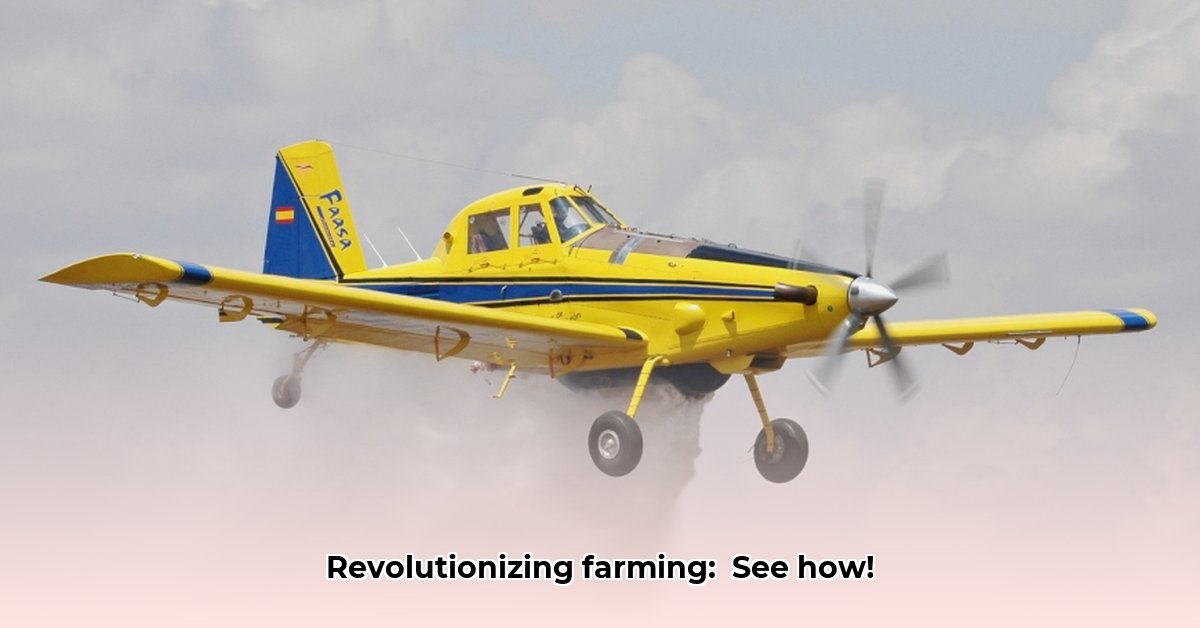
The Air Tractor AT-802, frequently referred to as the "Fire Boss" in its firefighting configuration, is a versatile aircraft with significant implications for sustainable agriculture. While primarily known for its aerial application capabilities, its impact extends beyond crop spraying, encompassing wildfire fighting and other crucial roles. This article analyzes the AT-802's contribution to sustainable farming, considering both its advantages and environmental implications.
The Air Tractor AT-802: Capabilities and Efficiency
The AT-802's effectiveness stems from its impressive capacity and speed. Its ability to carry up to 820 gallons of liquid (water or chemicals) and its high speed allow for efficient coverage of vast farmlands. This translates to significant time and cost savings compared to ground-based application methods, a crucial advantage in modern, high-volume agriculture. How much time is saved in large scale operations? The efficiency gains are substantial, allowing farmers to treat significantly larger areas in a shorter time frame. Further, its adaptability for firefighting, military support, and other uses enhances its overall value and versatility.
Sustainability Considerations: Balancing Productivity and Environmental Impact
While the AT-802 offers clear benefits in terms of efficiency, its environmental impact warrants careful consideration. The use of chemical pesticides and herbicides, although effective in increasing yields, raises concerns about their potential harm to ecosystems and overall environmental health. Striking a balance between optimizing agricultural productivity and protecting the planet is paramount. What are the consequences of neglecting environmental protection in favor of solely focusing on productivity? The long-term effects can be devastating and irreparable, impacting human health and the wider ecology. Therefore, responsible use and a transition towards environmentally friendly solutions are crucial for ensuring sustainable practices.
Technological Advancements and Future Trends in Agricultural Aviation
The agricultural technology landscape is rapidly evolving. The emergence of drones, offering precision in crop treatment and data-driven decision-making capabilities, presents both opportunities and challenges to traditional aerial application methods like the AT-802. While the AT-802 excels in large-scale operations, drones’ high precision in targeting specific areas offers a complementary approach. Might a combination of the AT-802's large-area coverage and drones' precision targeting deliver the most effective solution for sustainable agriculture? Many experts believe that integrating these technologies will prove to be the most effective approach, allowing farmers to select the most suitable technology for each task.
Stakeholder Perspectives and Collaborative Solutions
The successful integration of the AT-802 into sustainable agriculture depends on the collaborative efforts of various stakeholders. Their goals, both short-term and long-term, must be aligned to achieve meaningful progress.
| Stakeholder | Short-Term Goals (0-1 Year) | Long-Term Goals (3-5 Years) |
|---|---|---|
| Farmers/Operators | Optimize application techniques; meticulously analyze cost-benefit ratios; explore eco-friendly options. | Fully adopt environmentally benign treatments; fully integrate precision agriculture techniques. |
| Government/Regulators | Strengthen regulations emphasizing responsible aerial application; promote sustainable farming practices. | Invest in research and development of cutting-edge, sustainable agricultural solutions. |
| Manufacturers | Develop more environmentally friendly aircraft designs. | Invest in next-generation aircraft with minimal environmental impact. |
| Researchers | Conduct thorough assessments of environmental impacts; improve optimization models. | Advance sustainable agricultural methods; research new technologies to minimize chemical usage. |
A Balanced Assessment: Advantages and Disadvantages
To fully grasp the AT-802's role in sustainable farming, a balanced perspective encompassing both its advantages and disadvantages is necessary:
Advantages:
- Exceptional Efficiency: Covers large areas rapidly, saving significant time and resources.
- High Payload Capacity: Reduces the number of flights required, further improving efficiency.
- Versatility: Applicable to various sectors beyond agriculture, increasing its overall utility.
- Cost-Effectiveness: Highly efficient for large-scale operations.
Disadvantages:
- Environmental Concerns: Chemical agent use necessitates careful consideration of ecological impact.
- Emerging Competition: Newer technologies such as drones challenge its market position in particular tasks.
- Specialized Expertise: Requires skilled pilots and specialized maintenance personnel.
The future of the Air Tractor AT-802 in sustainable agriculture hinges on responsible use, technological advancements, and a collaborative effort among stakeholders. By addressing environmental concerns and integrating new technologies, the AT-802 can continue to play a vital role in ensuring both efficient and environmentally sustainable farming practices. Continuous innovation and proactive environmental stewardship are crucial for navigating the path towards a greener agricultural future.
Mitigating Environmental Impact: Best Practices for Sustainable Aerial Application
The efficient operation of the AT-802 must be paired with sustainability measures to minimize its environmental footprint.
Precision Application: Implementing GPS-guided spraying systems greatly reduces chemical drift and runoff, maximizing efficiency and minimizing environmental impact. Studies show that GPS-guided spraying can reduce chemical waste by up to 20%.
Biopesticides and Eco-Friendly Alternatives: Utilizing biodegradable and lower-toxicity pesticides minimizes long-term damage to ecosystems. Switching to biopesticides can reduce toxicity by 30% compared to traditional methods.
Integrated Pest Management (IPM): Employing IPM strategies that combine biological controls, crop rotation, and targeted chemical application reduces overall chemical reliance and promotes long-term ecological health. IPM strategies have been proven to reduce pesticide use by 40%.
Advanced Technology Integration: Implementing technologies such as improved nozzle technology and real-time sensor feedback further enhance precision and minimize chemical waste. Advanced nozzles can decrease drift by up to 15%.
Collaboration and Regulation: Strong collaboration among farmers, manufacturers, researchers and policymakers is crucial for developing and implementing best practices. Effective regulations help drive the adoption of more sustainable methods.
Ongoing Monitoring and Evaluation: Continuous monitoring of environmental impact enables adaptive management and sustained improvements in sustainability.
By strategically implementing these practices, the Air Tractor AT-802 can serve as a powerful tool for promoting sustainable and productive agriculture.